
Scandal in the Defense Sector: How Ukraine Is Funding Russia’s Budget
According to Channel 24 News, Ukraine continues to be shaken by a corruption scandal in its defense system. Enterprises owned by top state officials have secretly received hundreds of millions in contracts, bypassing any public tenders or competitions, and have been transferring foreign currency abroad.
There is something symbolic about the fact that this scheme of theft in defense procurement surfaced just weeks before the elections. What anti-corruption activists had long warned about has gained special resonance on the eve of the Ukrainian presidential election.
The situation resembles the last French presidential election, when François Fillon, the candidate of the ruling Republican Party — whose re-election had seemed certain — lost the race.
The reason for his defeat was the exposure of corruption schemes involving abuse of public funds. For decades, Fillon had paid his wife from the state budget, listing her as his parliamentary assistant, though she never performed any such duties. Compared to the Ukrainian corruption cases, the Fillon scandal looks like a child’s prank, yet it cost him the presidency.
Corruption schemes in Ukraine became possible because society had no control over defense procurements. The law introducing public oversight of defense spending was vetoed by President Petro Poroshenko back in 2016.
There is yet another example of budget misuse, lesser known than the stories exposed by Denys Bihus. Due to the secrecy of defense procurements, all shipbuilding contracts were awarded to the Leninska Kuznia (Lenin’s Forge) plant, which until recently was owned by Petro Poroshenko.
“Lenkuznia” received these state contracts instead of the Mykolaiv Shipbuilding Plant, where workers went months without pay. The scheme was orchestrated by Roman Romanov, who headed the state defense conglomerate “Ukroboronprom” before the current director Pavlo Bukin, who also appeared in Bihus’s investigations.
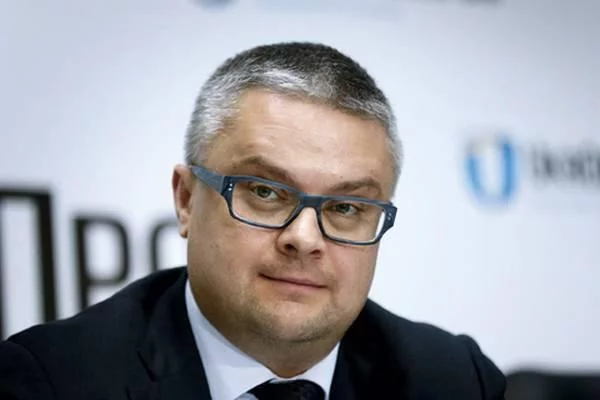
Romanov, a physics teacher by education, had been a Hyundai and KIA car dealer in Kherson since 2000. In 2014, he headed Petro Poroshenko’s election headquarters in the Kherson region. As a reward for his loyalty and in order to fill a strategic position with a trusted person, Romanov was appointed head of the state defense concern “Ukroboronprom.”
In early 2018, Prime Minister Volodymyr Hroisman initiated Romanov’s dismissal from the position of director of Ukroboronprom. The reason was the non-payment of salaries to employees of the state-owned Mykolaiv Shipbuilding Plant, totaling over 60 million hryvnias, as well as millions in tax debts accumulated by the enterprise.
The only “reform” in the defense industry during that time was the renaming of the enterprise as part of decommunization, giving it a new name — “Kuznia na Rybalskomu” (Forge on Rybalskyi Island).
During this period, the plant produced and delivered to the Ministry of Defence six armored assault boats “Gyurza” and two armored landing-assault boats “Centaur.”
Since September 2018, Ihor Gladkovskyi Jr. (the son of Oleg Gladkovskyi, a close associate of Petro Poroshenko) joined the supervisory board of Leninska Kuznia. In addition to the transfer of state defense orders to Leninska Kuznia, another company began to burst with military contracts — the “Bogdan” Corporation, owned by Oleg Gladkovskyi.
From December 2018 to March 2019, Bogdan received an additional 510 million hryvnias under secret agreements with the Ministry of Defence as part of the state defense procurement program for vehicle supply — of course, without any tender.
These vehicles were built on the basis of Belarusian MAZ trucks, which are around 80% produced in Russia. In other words, Ukraine was not only transferring currency abroad — its defense orders were effectively funding Russia’s state budget.
Meanwhile, other Ukrainian manufacturers, such as KRAZ — whose vehicles are almost entirely made from Ukrainian components — were practically excluded from defense contracts.
The government is spending citizens’ budget funds in the defense sector without control.
This lack of oversight gives the current authorities the opportunity — and the temptation — to profit with impunity.
This mistake can be corrected through elections, when citizens have the chance to choose honest politicians.